
Google Business Profile vs Website: Do You Need Both?
October 11, 2026 · By Miro Giovannini
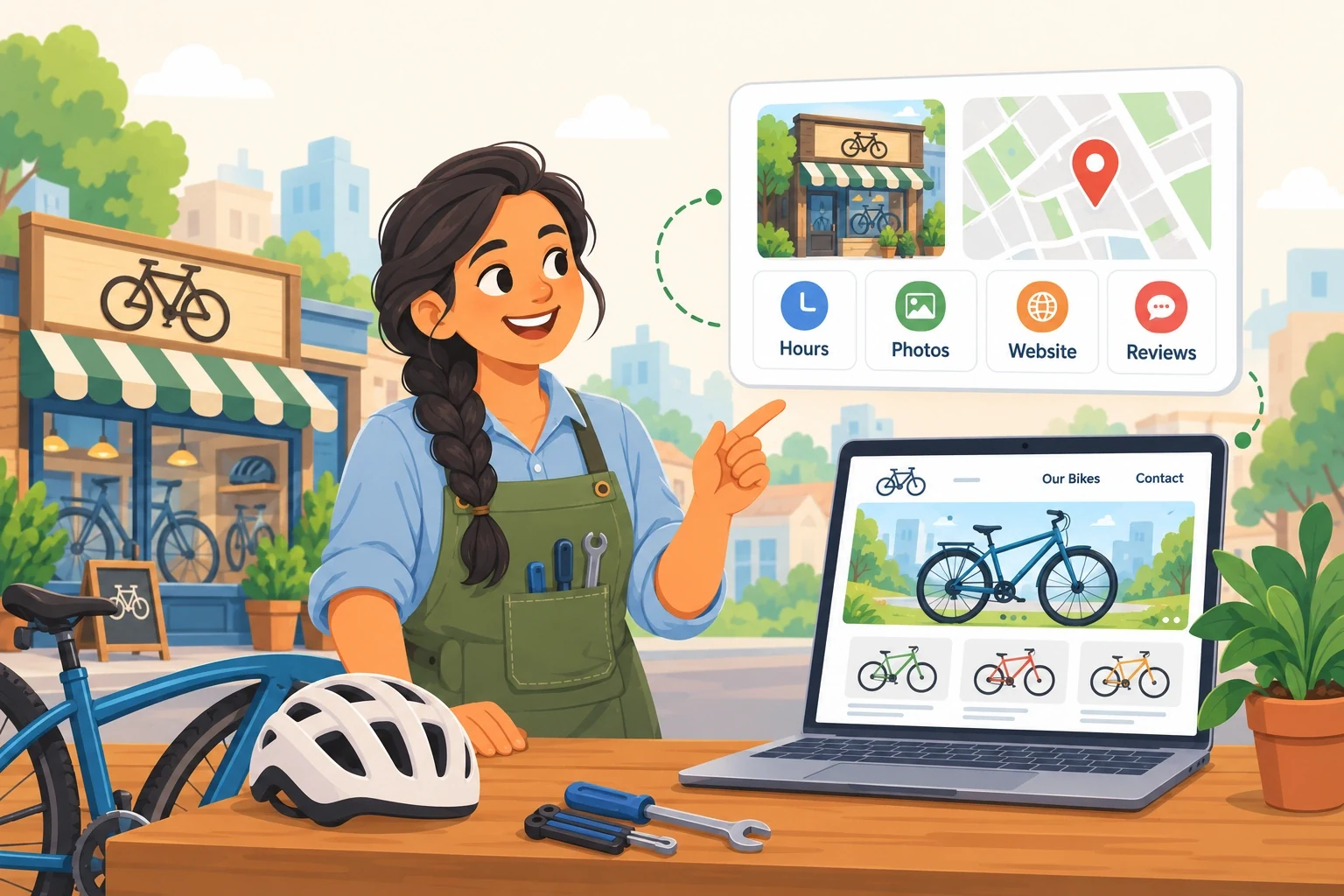
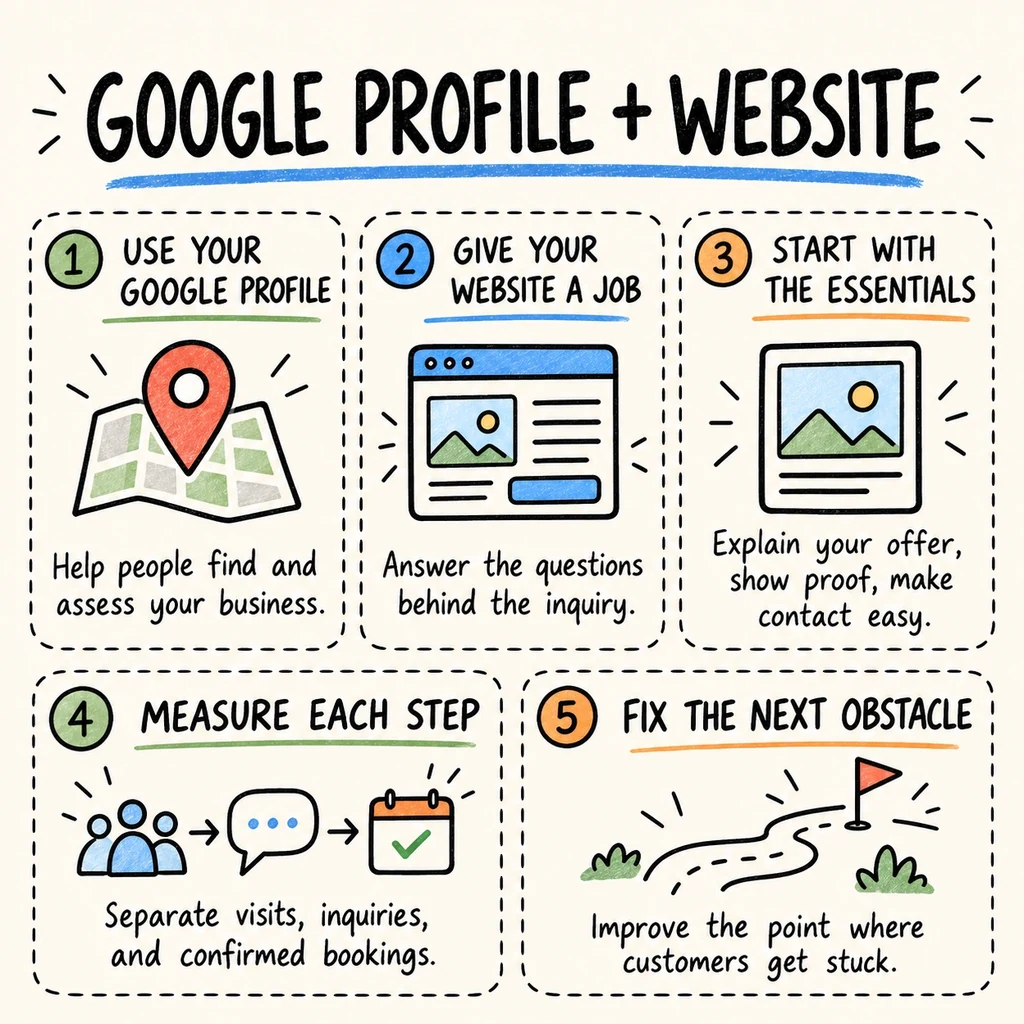
Google Business Profile (GBP) and a website complement each other: the profile helps customers find and assess your business on Google, while your website gives you more control over your message, customer experience, and measurement. I recommend using both.
That recommendation doesn't require an expensive website from day one. If your budget is limited, the decision is what useful first version you can build and which customer problem it should solve.
Think about the next person considering your business. Do they need directions, or do they need to understand a service before requesting a quote? Those situations call for different amounts of information. Start there when deciding where to invest.
Google Business Profile vs website: what does each do?
Your profile puts practical information close to the search: hours, location, photos, reviews, and ways to contact you. Your website lets you organize a fuller explanation around the customer's decision.
Your website can also be the first place a customer finds you. A service page may appear directly in organic search results, without someone visiting your profile first. Google's SEO Starter Guide explains how search helps people discover website content; creating a site alone does not guarantee visibility or rankings.
The roles overlap. Both can show photos and help people contact the business. The distinction is how much control you have over the presentation, the path through the information, and the tools connected to it.
A useful comparison therefore looks beyond which features each offers. Ask what your customer needs to accomplish and whether your current setup makes that easy.
What can Google Business Profile already do for your business?
I'm currently working with a restaurant that has both a website and a Google Business Profile. The profile regularly receives reviews and includes updated photos from the restaurant and its customers. It also provides a place for the restaurant's latest updates.
I see it as a storefront people can inspect before visiting the website or the restaurant. The photos and customer comments contribute to the trust someone needs before choosing a business.
Depending on availability, your restaurant profile can include menus, updates, ordering, and reservations. Your profile can already do meaningful commercial work; identify that contribution before deciding what the website should add.
Can customers take action without visiting your website?
Yes. Where supported, reservation and ordering options let customers take their next step from the profile. Some journeys use an external provider; the available setup matters.
Consider a hypothetical diner who knows your restaurant and wants directions. Sending that person through your homepage adds an unnecessary step. Keep the direct route useful.
For a different customer, the profile may begin a longer decision. That is where the website earns its place: by providing something the person still needs.
What should your website add beyond your Google profile?
A website should answer the questions that need more space, a different structure, or a more specific destination.
For a business offering private events, that could mean explaining the available formats, showing relevant photos, and clarifying how to ask about availability. For a contractor, it could mean organizing examples by the type of project a customer is considering.
Choose information that helps someone decide whether the offer fits. Adding more pages or repeating the profile's photos doesn't automatically create that value.
How do Google Business Profile and a website serve different customer needs?
Imagine a restaurant in the San Fernando Valley that also hosts private celebrations. This is a hypothetical example, separate from the restaurant I mentioned earlier.
One customer sees the reviews, checks the hours, and requests directions. Another is planning a family celebration. After checking the profile, that person visits the website to understand the event options, view relevant photos, and submit an inquiry.
The website's job in the second journey is specific: help someone evaluate the occasion they are planning and request the next step. The profile has already helped establish an initial impression.
That distinction gives you a practical website brief. Build around the questions behind the inquiry.
Why avoid relying only on Google Business Profile?
I don't recommend depending exclusively on GBP to bring in customers. My concern is concentrating the business's customer acquisition in a platform whose rules and available features are outside your control.
A website provides another destination you can develop around your business. It gives you more choices about what to publish, how to explain your offer, and where to send people from different marketing activities.
It doesn't automatically diversify your traffic. If every visitor still arrives through Google, your sources remain concentrated. The website makes additional routes possible; your marketing plan has to develop them.
What does more control over your website actually mean?
Make that control practical. The business should have appropriate access to its domain registration, website administration, and measurement accounts. Keep responsibilities clear if a provider manages them.
For the customer, control means you can organize a service explanation, create a focused page for an offer, or change an inquiry process when it causes confusion.
Your site still depends on hosting and other services. The advantage is having more options for how you present the business and manage the customer journey. Ownership of a domain alone doesn't make an unclear website useful.
Can you advertise without a website?
Yes, but the available options depend on the campaign and its requirements.
Google's guidance on advertising destinations describes using a Google-hosted destination based on an optimized Business Profile with Performance Max. That guidance should not be read as permission to substitute a profile for a website in every campaign.
Meta also offers lead-generation options through forms, messages, and calls. Advertising outside Google is therefore possible without your own website.
My recommendation to have a website rests on the additional control and flexibility it gives the business. Check the destination requirements of the specific campaign you intend to run.
How does a website help you measure marketing across channels?
GBP already provides performance metrics, including profile views, direction requests, and clicks on the call button or website link. These are available for verified profiles, and the metrics shown depend on the business.
Your website adds flexibility: you can bring visitors from different marketing activities to relevant pages and configure measurement for the actions that matter there. This gives you a place to examine what happens after someone arrives.
Google's website tagging documentation covers measurement, conversion tracking, and visitor segments. Meta Pixel also measures website activity, including events and conversions.
Return to the hypothetical event inquiry. The measurement plan could distinguish a visit to the events page, a click on the inquiry button, and a successfully submitted form.
Those are different signals. Configure and test the events, identify traffic sources consistently, and check what remains visible when customers move to an external booking system.
How can website visits support remarketing audiences?
Website activity can also support advertising audiences, allowing eligible previous visitors to receive relevant follow-up advertising.
In the hypothetical restaurant example, a segment of visitors to the events page could support a follow-up ad about private celebrations, with a link back to the relevant details. Whether that segment can be used depends on the platform, the setup, audience eligibility, and applicable privacy requirements.
Installing a tag doesn't guarantee that every visitor becomes reachable. Google, for example, sets minimum audience requirements and restricts tagging for certain offers.
Think of these as audiences created within each platform using permitted data. They are not a customer list you automatically own or can freely transfer between advertising systems.
Which website actions count as leads or sales?
Keep attention, inquiries, and commercial results separate. A website visit is not a booking. A submitted inquiry is not a confirmed event.
In the hypothetical restaurant example, the business would need a process for connecting inquiries with confirmed bookings before attributing booked revenue. If that connection isn't available, report the stage you can verify.
The same principle applies to calls. A tap on a phone number doesn't establish that someone spoke to the business or purchased.
My guide to knowing whether your digital marketing is working develops this further. Here, define the meaningful action before choosing the website's measurement setup.
What should your first small business website include?
My starting point is four essentials: your value proposition, examples of what you offer, genuine testimonials if you have them, and a clear commercial next step.
Explain what you provide and what makes it different. Give the customer details they can evaluate, rather than a broad claim such as “the best service.” Show relevant products or work, and use authentic customer feedback when available.
Then make it clear how to find you, call, reserve, or request information. The appropriate action depends on how your business operates.
For a hypothetical service provider, a first version might explain the service and area covered, show relevant work, include available testimonials, and provide a working inquiry form. Those elements give a local business website a concrete purpose.
What should you prioritize when your website budget is limited?
Begin with the obstacle closest to a customer's next action. Incorrect hours, a broken booking link, or a form that never reaches anyone deserve attention before extra pages.
If your profile already handles basic discovery and contact, define what the first website must add. A focused page may be enough initially if it explains the offer, presents useful evidence, and supports the intended action.
Compare proposals by what they deliver. Ask about mobile usability, the contact or booking process, measurement setup, access to accounts, and ongoing responsibilities. A low page count doesn't tell you whether those needs are covered.
Features without a clear customer purpose can wait. Use the initial scope to solve an identifiable problem, then assess what additional work is justified.
When should you expand a simple business website?
Expand when different services, offers, or customer questions need their own explanation. An event inquiry may need information that would overwhelm a page intended for everyday restaurant visits.
Repeated questions can help identify what is missing. Review what people ask when they call or submit a form, and check whether the website answers it clearly.
A larger gallery, additional service pages, or a content program should have a reason to exist and someone responsible for keeping it useful.
For restaurant-specific priorities, see why a restaurant needs a website. The decision here is how much website your current customer journey needs.
How should your Google profile and website work together?
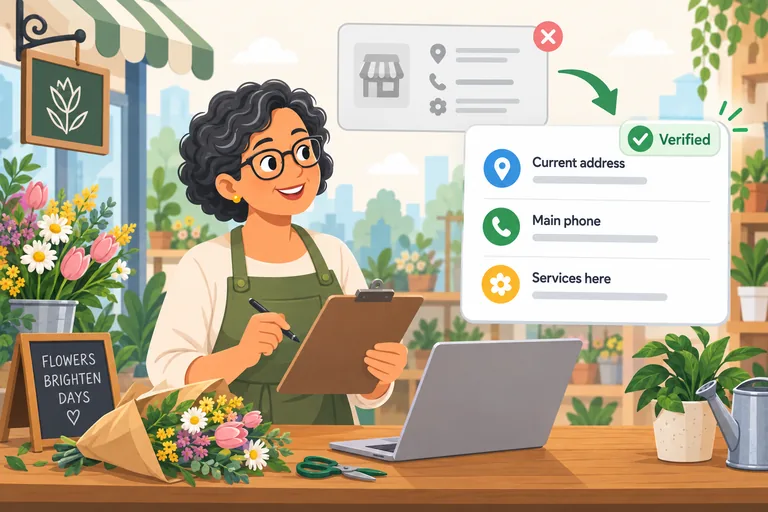
Keep the practical information consistent: business identity, contact details, hours, and relevant services. Review both when the business changes.
Make the destinations useful. Someone following a booking link should reach the intended booking process. Someone exploring a specific service should be able to find the explanation that brought them there.
Test the journey on a phone, including any handoff to another provider. Confirm that an inquiry reaches the right person and that the business can respond.
My Google Business Profile optimization guide covers profile maintenance. Connecting the two tools requires checking the whole path a customer follows.
Should you improve your Google Business Profile or website first?
Choose one customer task: finding your location, understanding a service, reserving, or requesting a quote. Follow it from the profile through any website or booking pages it requires.
If the profile completes that task well, preserve the direct route. If the customer needs more information, improve the relevant website content. If the process works but you cannot evaluate it, address measurement.
That gives your next investment a clear purpose. It also keeps the recommendation to use both tools grounded in the way your business actually acquires customers.
As a marketing consultant for local businesses, I recommend developing a useful website alongside GBP, with a clear offer, credible evidence, and an easy next action.
If you're deciding what your first website should include or how it should work with Google Business Profile, you can book a free call. We'll review the customer journey and identify a practical next step.
Ready to bring in more customers?
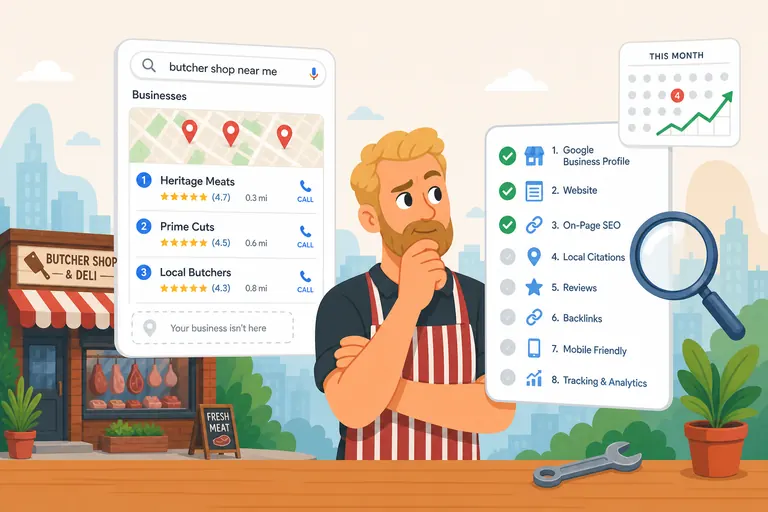
Get a free 30-minute marketing review. We'll look at what you have today and identify the one or two changes that could make the biggest difference.