
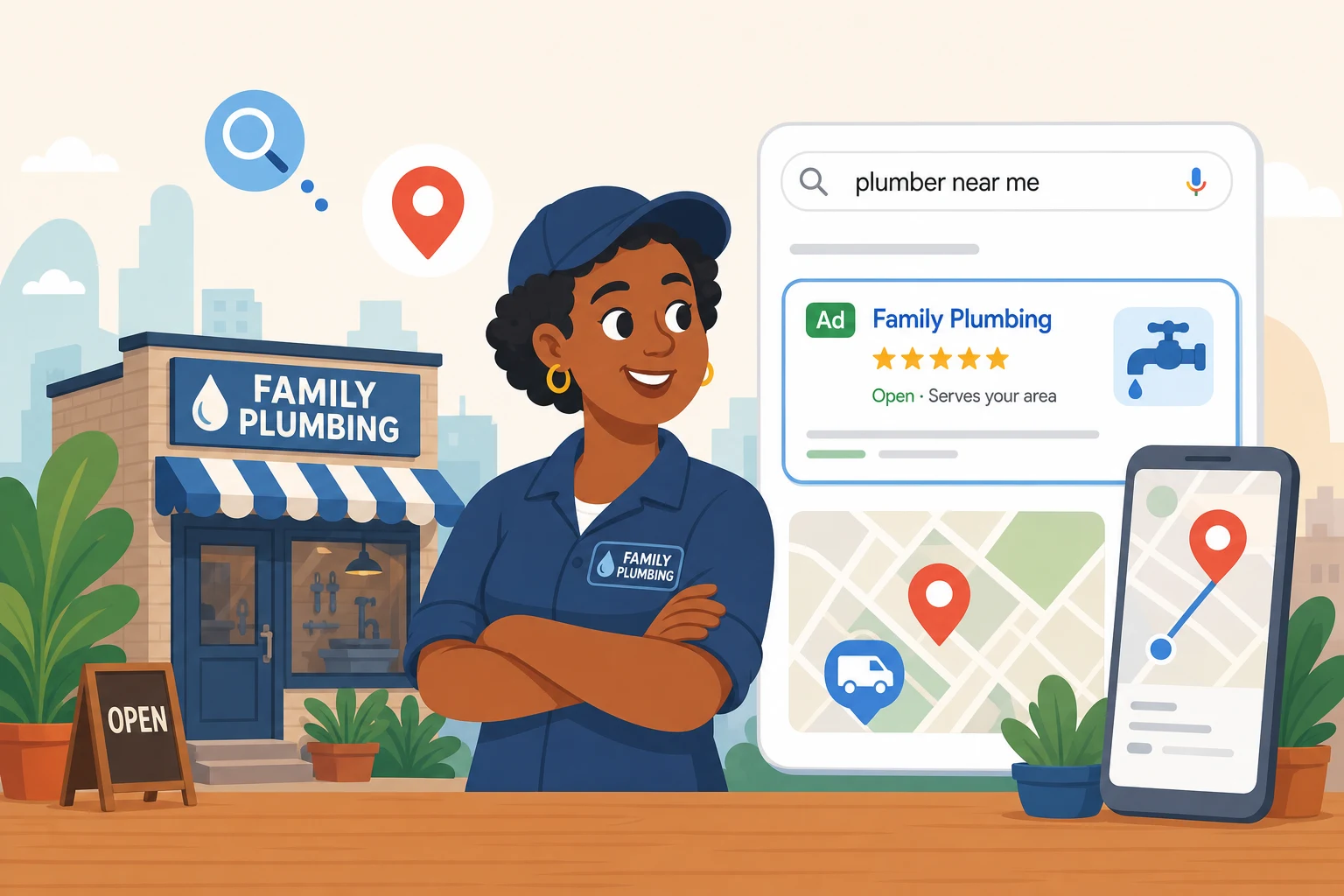
Small Business SEO Tips That Drive More Local Customers
August 16, 2026 · By Miro Giovannini
If you've been searching for small business SEO tips that actually fit your situation, you've probably noticed most guides assume you have a content team, a developer on call, and a sizable monthly ad budget. Many small-business guides are written with larger teams in mind, not for the salon owner in Reseda or the plumber working the San Fernando Valley who just wants more calls from Google without hiring an agency.
That gap is exactly why Miro Giovannini Blog exists: plain-language marketing guidance built around how local search actually works, not how national brands run campaigns. The small business SEO tips in this guide are prioritized by impact, and the first several cost nothing but a focused afternoon. If you run a community-based business and want more local customers finding you online, start here.
Why local SEO outperforms generic SEO for community-based businesses
Generic SEO is a volume game. You compete against thousands of websites fighting for the same broad keywords, and without serious domain authority, you lose. Local SEO is a completely different contest, one a neighborhood business can actually win.
When someone searches "dentist near Van Nuys" or "emergency plumber Burbank," Google filters results by geography. A locally optimized page from a small business can outrank national directories and brand websites for that specific search, even with a fraction of the domain authority. For service businesses and retail shops, ranking in the map pack for a hyperlocal term drives more qualified calls than any page-one national ranking ever would.
The keyword strategy shift is straightforward. Instead of targeting "landscaping services," you target "landscaping company in Northridge" or "lawn care near Chatsworth." Tools like Google Search Console reveal exactly which local queries are already sending people to your site, and those queries tell you where to double down. Neighborhoods, city names, nearby landmarks: these geographic modifiers shift you from competing globally to winning locally.
Google publicly acknowledges three local ranking factors: proximity, relevance, and prominence. Optimizing for them means completing your Google Business Profile, earning consistent reviews, and building accurate citations across the web. The next three sections cover each of those in detail.
Small business SEO tips: Google Business Profile optimization
If you only make one change today, make it here. A fully optimized Google Business Profile is widely recognized as the highest-impact local SEO action available to a small business, and it's free.
Start by choosing the most specific primary category that matches your core service. "Plumber" is more useful than "Home Services," and "Italian Restaurant" beats "Restaurant." Then fill in every available field without skipping: business description, services, products, hours, service area, and attributes. Your description should name what you do, who you serve, and where you serve them, including location helps strengthen your relevance signals with Google. Add real photos of your work, your space, your staff, or your equipment. Real photos perform better for local trust and engagement than stock images.
Two fields often left blank are the services/products section and the Q&A section. Filling in services and products can help Google understand additional offerings beyond your primary category, potentially expanding the searches your listing appears for. The Q&A section lets you seed common customer questions with your own answers; those answers may also surface in search results or help users browsing your profile. Turn on messaging only if you can respond reliably, an unanswered message creates a worse impression than no messaging feature at all.
Keeping your profile active matters as much as completing it. Google rewards profiles that show consistent engagement. Publish updates, seasonal offers, or service announcements regularly, aim for at least a few times per month if you can manage it. Check your GBP Insights monthly to see which search queries triggered your listing and which actions customers took afterward: calls, direction requests, and website clicks. Those numbers tell you whether your profile is converting views into actual contact attempts.
GBP checklist: 8 fields to complete before moving on
-
Primary category (as specific as possible)
-
Business description (what you do, who you serve, where)
-
Services and products fields
-
Hours of operation (including holiday hours)
-
Service area
-
Attributes (e.g., wheelchair accessible, women-owned)
-
Real photos of your work, space, or team
-
Q&A section (seed it with your own questions and answers)
On-page SEO essentials that move the needle fast
Your website's pages need to clearly communicate what you do and where you do it, both to customers and to Google. A few structural changes to your most important pages can produce meaningful ranking improvements without touching a single line of code.
Title tags are one of the strongest on-page signals for local search. Put your primary keyword near the front, add a location signal for any locally-focused page, and keep the whole thing under 60 characters to prevent truncation in search results. Your meta description doesn't directly affect rankings, but it sells the click: write one clear sentence that names the page's value and includes a soft call to action. Every page needs a unique title and meta. Using the same description site-wide wastes one of your clearest relevance signals.
Heading structure is simpler than most guides make it sound. Use one H1 per page that clearly names the page's main topic. Use H2s for major sections and H3s for supporting points. Don't skip levels. Headings should describe what's actually on the page in plain language. Vague labels like "Our Services" or "About Us" tell Google almost nothing.
LocalBusiness schema markup is an on-page element commonly omitted by small businesses. It's structured code that tells Google your exact business name, address, phone number, hours, and service type with precision. Adding it reduces ambiguity and supports richer search appearances. If your site runs on WordPress, Squarespace, or Wix, there are plugins and built-in tools that generate this markup without any manual coding.
Quick small business SEO tips for on-page optimization
-
Lead each title tag with the primary keyword and a location modifier
-
Write a unique meta description for every page with a clear call to action
-
Use one H1 per page; avoid duplicate or missing headings
-
Add LocalBusiness schema via a plugin if you're on WordPress, Squarespace, or Wix
-
Check Google Search Console's Coverage report to confirm key pages are indexed
Building a consistent local presence with citations and NAP
NAP stands for Name, Address, and Phone number. Make your NAP consistent across listings, major discrepancies like different phone numbers, old addresses, or alternate business names send conflicting signals that hurt your local rankings. Google can often resolve minor formatting variations (such as "St." versus "Street"), but genuine conflicts erode trust in your listing.
The most damaging inconsistencies are the substantive ones: an old phone number still appearing on a directory site, a business name that appears differently across listings, or an outdated address from a previous location. Auditing and correcting these issues yields lasting benefits, though periodic re-checks are worth scheduling since new directories and data-provider updates can reintroduce inconsistencies over time. Create a single master document with your exact business name, address, and phone, then use it as the source of truth whenever you claim or update a listing.
For U.S. small businesses, claim these five platforms first: Google Business Profile, Apple Business Connect, Bing Places, Yelp, and Facebook. After those, add BBB, Yellow Pages, and Foursquare as universal trust signals. Then go to industry-specific directories that carry extra relevance in your vertical:
-
Home services contractors: Angi, HomeAdvisor, Houzz, Thumbtack, Porch
-
Restaurants: TripAdvisor, OpenTable, Zomato
-
Healthcare and wellness: Healthgrades, Zocdoc, Vitals
-
Legal: Avvo, FindLaw, Justia, Martindale-Hubbell
Industry-specific directories carry more topical relevance than general ones because they confirm what your business does, not just where it is. Getting listed in the right niche directories builds topical authority on top of the general citation foundation.
Earning and managing customer reviews without risking platform violations
Reviews are a confirmed local ranking factor. Volume matters, recency matters, and your response rate matters. Research into local search performance consistently shows that businesses with larger review counts, some studies point to 100 or more reviews as a meaningful threshold, tend to rank higher on average, and fresh reviews signal to Google that the business is still active and relevant.
The best time to ask for a review is immediately after a successful service or purchase, while the customer is still in a positive mindset. Use a direct link or QR code that opens your Google review form in one tap. Every step you remove from that process increases the percentage of customers who actually follow through. Ask every satisfied customer, not just the most enthusiastic ones, selective asking creates a skewed sample and can put you in violation of platform guidelines.
The policies are clear on what's prohibited. Do not offer incentives such as discounts, gifts, or cash in exchange for reviews on any platform. Do not route unhappy customers to private feedback while sending happy ones to public review sites. That practice, called review gating, violates Google's policies and can result in listing penalties. Never post fake reviews or ask employees to review the business. The short-term gain is not worth the risk.
Responding to every review is the step most businesses skip, and it matters more than most owners realize. Responding to positive reviews signals engagement to Google. Responding to a one-star review calmly and professionally can actually convert skeptical prospects who read it before deciding to call. Keep responses specific to the review content rather than using generic copy-paste templates. A short, personalized reply is often more effective than a long, generic paragraph.
Tracking your SEO results without drowning in data
You don't need a dashboard with 30 metrics. You need three free tools, three numbers to watch, and 20 minutes a month. That's enough to know whether your local SEO efforts are working and where to focus next.
Google Search Console is free and takes under 20 minutes to set up. It shows which search queries bring people to your site, how many clicks each page receives, and whether any pages have indexing issues that prevent them from appearing in search. Verify ownership through your domain provider or by adding an HTML tag. Most website platforms have a direct integration that makes this a one-click process. After setup, check the Coverage report first to confirm your key pages aren't accidentally blocked from being indexed.
From your Google Business Profile Insights, three numbers are worth checking monthly. First, the search queries that triggered your listing: these tell you what local searches you're winning. Second, the actions taken: calls, direction requests, and website clicks show whether your profile is converting impressions into actual contact attempts. Third, photo views: an early signal of whether your visual content is attracting attention before customers even reach your site.
A simple monthly review routine looks like this: 20 minutes reviewing Search Console for new queries and coverage issues, a quick check of GBP Insights for traffic and action trends, and responses to any new reviews. Track your ranking position for two or three core local search terms using a free rank-checking tool. That gives you a useful snapshot of whether your foundation is working, and a clear baseline to measure progress against.
For ongoing, plain-language guidance on every topic in this article, Miro Giovannini Blog covers local SEO, Google Ads, Google Business Profile strategy, and more in the same no-jargon format, written specifically for small business owners in the San Fernando Valley and greater Los Angeles area who want real results without an agency price tag.
Start with one section, not the whole list
The most common mistake in local SEO isn't doing things wrong. It's waiting until you feel ready to do everything at once. The highest-impact moves on this list, completing your Google Business Profile, fixing NAP inconsistencies, optimizing a title tag, asking five customers for reviews, can each often be done in under one to two hours, and any one of them can move your visibility in the next 30 to 60 days.
A complete local SEO foundation is genuinely buildable in a weekend: Google Business Profile fully completed, core citations claimed and consistent, on-page basics fixed on your top two or three pages, and Search Console connected. That's the 20% of effort that produces the majority of your results. You don't need to master all of it before you start.
Pick one section from this article and act on it today. Apply these small business SEO tips one at a time to see real local gains, no agency required. If you want deeper walkthroughs on any of these topics, including keyword research, Google Ads strategy, landing page optimization, or Meta Ads for local businesses, Miro Giovannini Blog has guides built for business owners, not marketing teams.

Ready to bring in more customers?
Get a free 30-minute marketing review. We'll look at what you have today and identify the one or two changes that could make the biggest difference.