

The Best Marketing Strategy for Local Businesses
May 12, 2026 · By Miro Giovannini
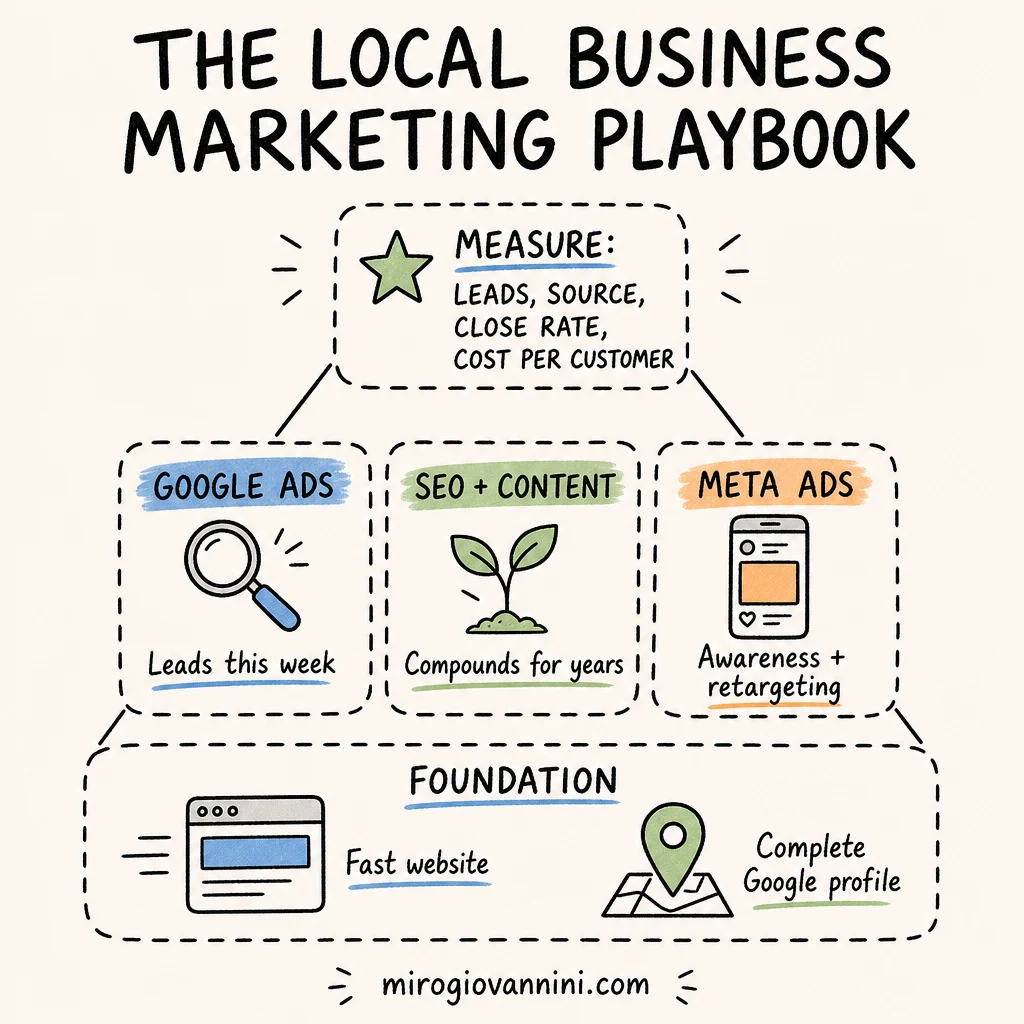
The best marketing strategy for a local business is narrow on purpose: a fast website and a complete Google Business Profile as the foundation, then Google Ads for immediate leads, SEO and content for long-term growth, and a small Meta budget for awareness and retargeting. Four things, done consistently, beat twelve things done occasionally.
If you own a local business, a restaurant, a dental practice, a contracting company, a fitness studio, your marketing does not need to be complicated. It needs to be focused. The businesses I work with in the San Fernando Valley that grow fastest are not the ones doing everything. They are the ones doing three or four things really well.
Here is the playbook.
What Has to Be in Place Before You Spend on Ads?
Two things: a website that works and a Google Business Profile that is complete. Send traffic anywhere else and you are paying to lose people.
Your website should be fast, mobile-friendly, and clear about what you do, where you do it, and how to reach you. Every service gets its own page. Your phone number is tappable. Your form actually delivers. Speed is not cosmetic here, Google's Core Web Vitals define measurable thresholds for loading and stability, and a slow page loses customers before it loses rankings.
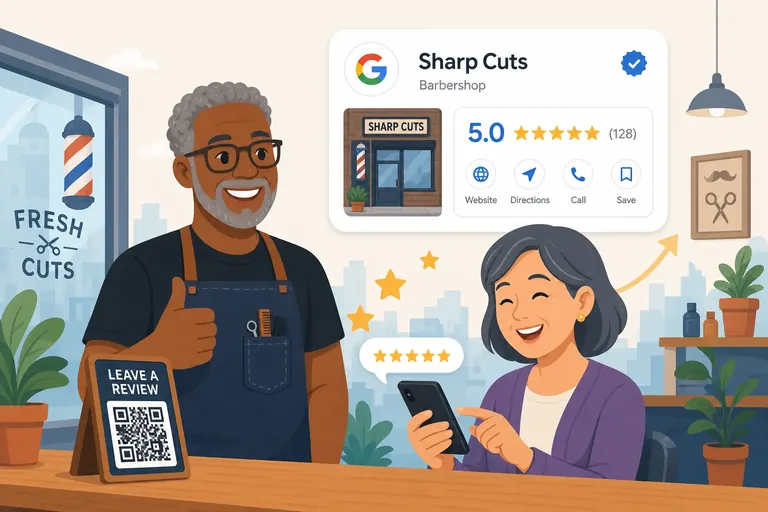
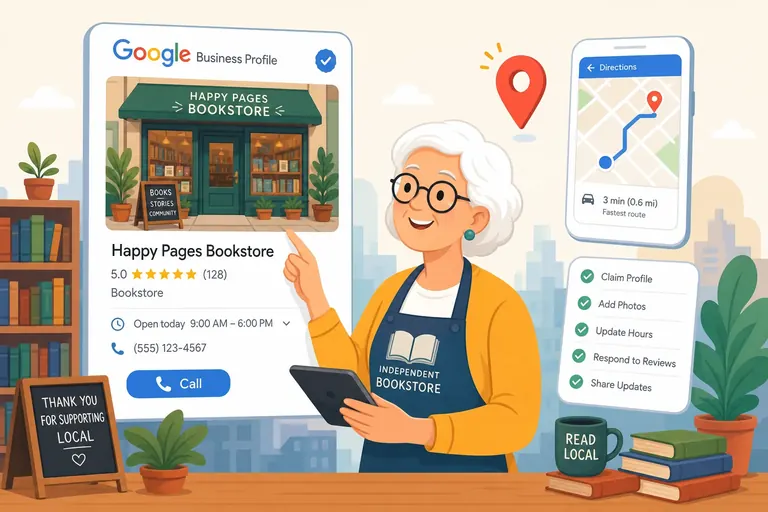
Your Google Business Profile should be fully filled out with accurate hours, real photos, your service area, and a steady stream of reviews. Google's guidance on local ranking comes down to relevance, distance, and prominence, and the parts you control are relevance and prominence. For many local businesses, this listing drives more calls than the website itself.
These are not optional. They are the foundation everything else builds on, and I go deeper in how to optimize your Google Business Profile.
Which Three Channels Matter Most?
Why Start With Google Ads?
Because intent is already there. When someone in Northridge searches "plumber near me," or a business owner in Thousand Oaks types "marketing consultant," they are ready to hire. Google Ads puts you in front of them at that exact moment.
This is the fastest way to generate leads. You can launch today and see calls this week. For most local businesses, $1,000 to $3,000 per month in ad spend is a reasonable starting point, and I break the math down in how much do Google Ads cost for small businesses.
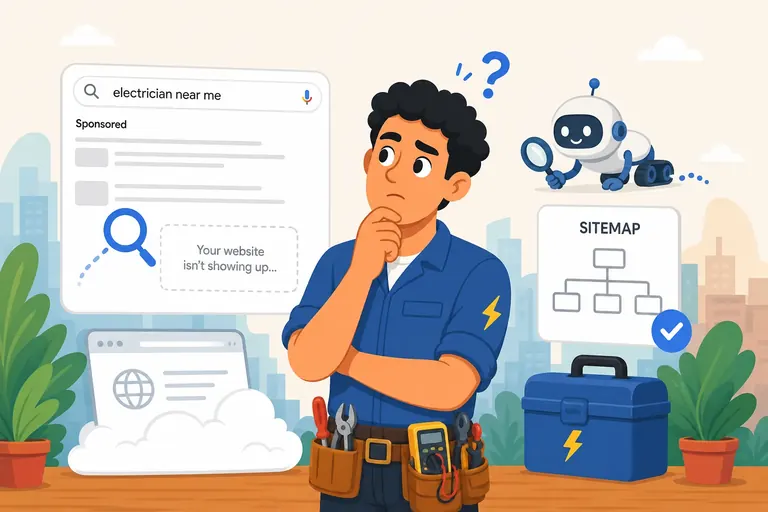
Two things make or break it: keyword intent and conversion tracking. Google's conversion tracking documentation explains how to count calls and form fills, and without that, every decision you make afterwards is guesswork.
Why Bother With SEO and Content?
Because ads stop the day you stop paying, and content does not. Every article you publish, every service page you improve, every review you earn builds an asset that keeps producing.
The key is consistency, not volume. One genuinely useful post a month, one new review a week, and steady improvement to your site's content and technical health. Six months of that changes your visibility materially. Google's own SEO starter guide is the whole methodology, and it is less mysterious than the industry pretends.
Where Do Meta Ads Fit?
In two specific jobs: reaching people who do not know you yet, and reminding people who visited your site and did not call. A modest budget of $500 to $1,000 per month with strong visuals and local targeting builds recognition in your community over time.
Meta is not a substitute for search. It is the layer that makes your name familiar before the moment of need arrives. If you are choosing between the two with limited budget, Google Ads or Facebook Ads: which should you try first answers it directly.
How Much Should You Spend on All This?
A common planning range is 5 to 10 percent of revenue, weighted toward the higher end if you are trying to grow rather than hold steady. The U.S. Small Business Administration's guidance on marketing and sales treats promotion as a planned, recurring line item rather than a discretionary expense, which is the right mental model.
The number matters less than the discipline of setting one and holding to it for long enough to learn something. I work through the reasoning in how much of your revenue should go to marketing.
What Does a Good Marketing Month Look Like?
Week 1. Review last month's results. What worked, what did not, and adjust your Google Ads and Meta Ads based on the data rather than on how the month felt.
Week 2. Publish one blog post or update one service page, on a topic your customers actually ask about.
Week 3. Check your Google Business Profile. Respond to new reviews, positive and negative. Post an update or a photo.
Week 4. Ask three happy customers for a review. Follow up on leads that did not close. Plan next month.
That is two to four hours a month once you have a system. If someone else manages your ads and site, your involvement drops to reviewing reports and approving content.
Who Should Do the Work?
Somebody has to own it, and "everyone a little" means nobody. For most local businesses the realistic options are you with two to four focused hours a month, a part-time person handling the routine tasks, or an outside specialist for the paid channels while you keep the profile and reviews in-house.
The part owners get wrong is hiring for output instead of outcomes. A vendor who reports impressions and post counts is describing activity, not results. Ask for leads, cost per lead, and closed customers, and if those numbers cannot be produced, the tracking is broken before the strategy is.
There is also a threshold where doing it yourself stops making sense: once ad spend passes a few thousand a month, or once the hours you spend on marketing cost you more in unbilled work than a specialist would. I wrote about that decision in how to know when it is time to hire a marketing expert.
What Should You Skip?
Not every channel deserves your time, and saying no is most of the strategy.
- Organic social posting with no paid support. Organic reach for business pages is close to zero. Posting three times a week into that is effort you will not get back.
- SEO services promising first-page rankings. Nobody can guarantee rankings. Anyone who does is either misleading you or using tactics that will cost you later.
- Print directories and coupon books. The return has been falling for fifteen years. That money works harder online.
- Building a TikTok presence, unless you are a restaurant or a lifestyle brand. TikTok is powerful, but for most local service businesses your customers are on Google at the moment they need you.
Skipping these is not laziness. Every channel you add divides the same attention and budget, and local businesses lose far more often to spreading thin than to missing a platform.
What Changes by Business Type?
The four pillars stay the same, but the weighting shifts.
Emergency and urgent services like plumbing, HVAC, locksmiths, and towing should put most of the budget on search. Nobody browses Instagram for a burst pipe. Your Google Business Profile and your search ads carry the business, and reviews are the tiebreaker at the moment of decision.
Considered purchases like dental practices, law firms, remodelers, and clinics need both. People research for weeks, so search captures the intent while Meta and content keep you present during the consideration window. Retargeting matters far more here than it does for emergency services.
Restaurants, salons, and lifestyle businesses lean visual. Photos on your profile, Meta and Instagram ads, and reviews do the heavy lifting, and search plays a supporting role for "near me" discovery.
If you only remember one thing: the more urgent the need, the more your money belongs in search. The longer the decision, the more it belongs in visibility and follow-up.
How Do You Know If It Is Working?
Track four numbers. You do not need a marketing degree for any of them.
- Lead volume. How many calls and form submissions came in this month?
- Source. Where did those leads come from: Google Ads, organic search, Meta, direct?
- Close rate. How many became paying customers?
- Cost per customer. Total marketing spend divided by new customers.
If your cost per customer is comfortably below your profit per customer, the machine works and your job is to feed it more budget. If it is not, something upstream needs fixing before you spend more. The diagnostic sequence is in how to know if your digital marketing is actually working.
How Long Before You Judge Any of It?
Give paid channels 30 days before drawing conclusions and 90 before making structural changes. Give SEO six months. The single most expensive habit I see in local marketing is switching things off in week two, because it destroys the learning that your money already paid for.
What About Slow Seasons and Tight Months?
Reduce, do not disappear. When cash is tight, cut back to your highest-intent campaigns and your evergreen keywords rather than switching everything off, for reasons I lay out in should you pause your Google Ads during a slow season.
Slow periods are also when your competitors go quiet, which makes attention cheaper. Use those weeks for the work you never get to when you are busy: rewriting ad copy, fixing the landing page, filling out the profile, asking for the reviews you kept meaning to ask for.
What Is the One-Sentence Version?
Have a website that converts, own your Google Business Profile, show up when people search, and stay visible in your community with a small, steady ad budget.
Do those consistently for a year and you will outperform most of your competitors, not because the tactics are clever, but because most of them will not do any of it well for twelve months straight. Marketing for a local business is not an intelligence test. It is a consistency test.
If you want a strategy built around your business and your market instead of a generic list, book a call. Thirty minutes, no pressure, and you will leave with something actionable whether we work together or not.
Ready to bring in more customers?
Get a free 30-minute marketing review. We'll look at what you have today and identify the one or two changes that could make the biggest difference.