
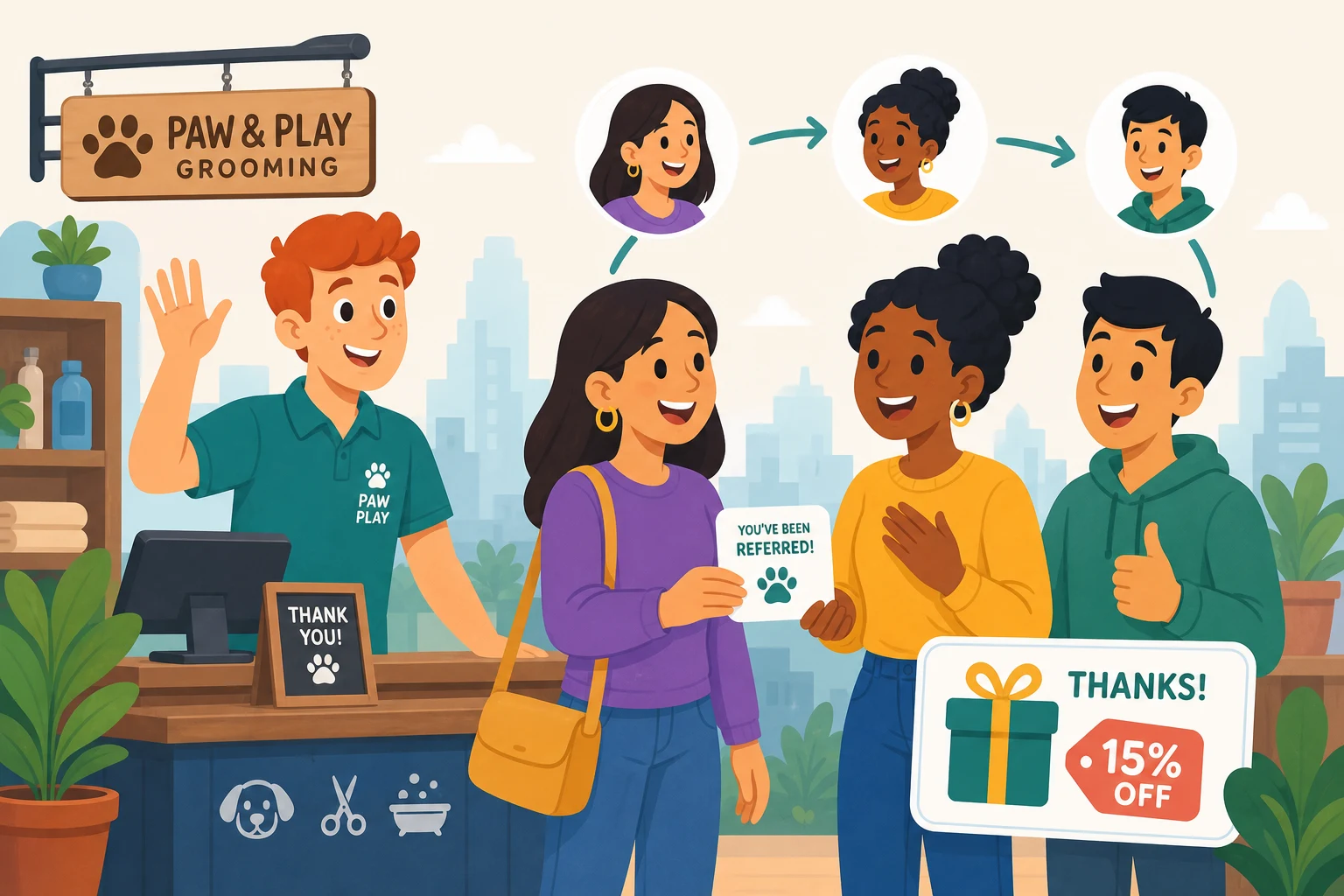
How to Build a Customer Referral Program That Actually Works
June 20, 2026 · By Miro Giovannini
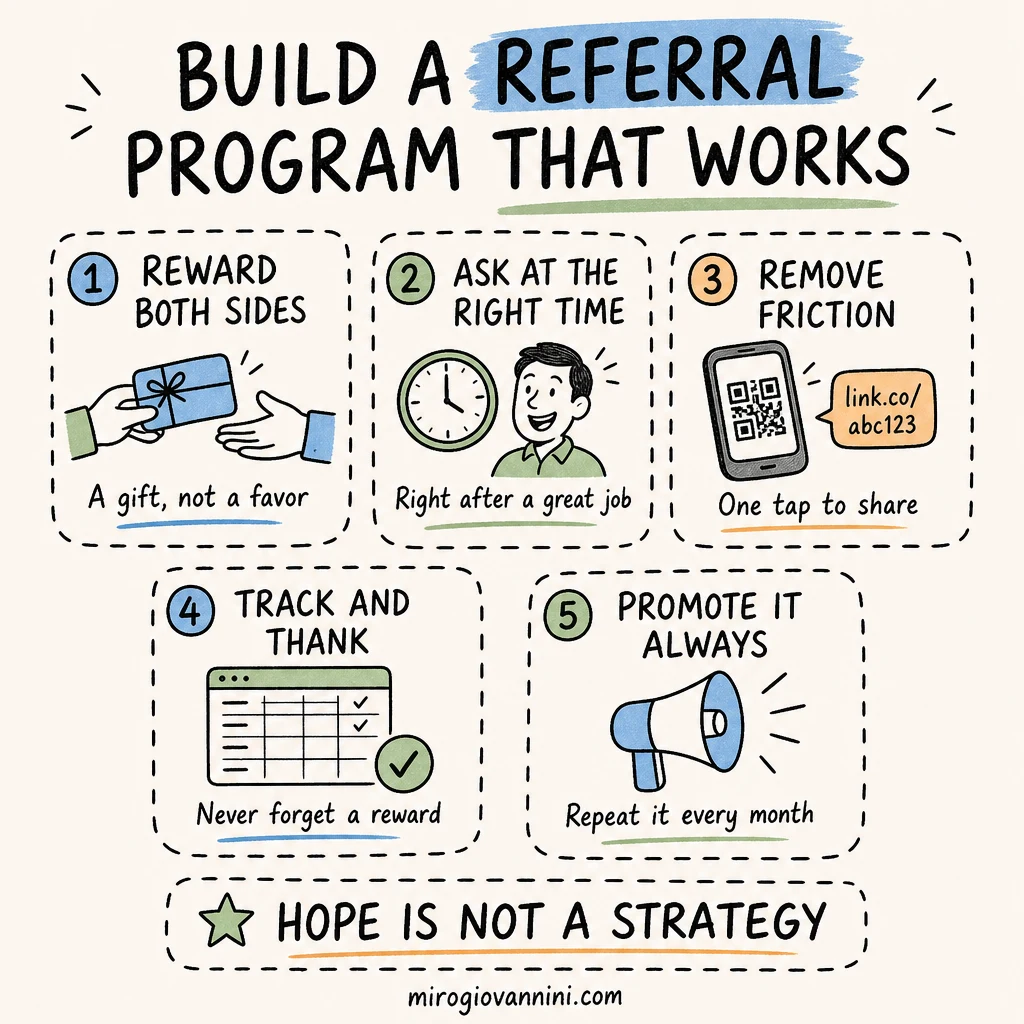
To build a customer referral program that works, you need four things: a reward both sides receive, an ask built into your normal routine, a referral process with almost no friction, and a record of who referred whom so nobody gets forgotten. You do not need software or a budget to start this week.
Ask any local business owner in the San Fernando Valley where their best customers come from and most will say the same thing: word of mouth. A neighbor told a neighbor. A happy client mentioned you at a dinner in Sherman Oaks. Someone saw a friend's post and sent a text. Referrals are the lifeblood of local business and always have been.
Here is the problem. Most owners treat referrals as something that just happens. They cross their fingers and hope. Hope is not a strategy, and the businesses that grow fastest in Encino, Burbank, and Van Nuys are the ones that turn word of mouth into a system.
Why Is a Referral Program Better Than Paid Advertising?
A referred customer arrives already trusting you, which removes the most expensive part of the sale. They are not a stranger who clicked an ad and is now comparing you against four competitors. Someone they know vouched for you.
That trust shows up in the numbers. Referred customers tend to close faster because they are shopping around less, spend more over their lifetime with you, refer other people themselves, and cost almost nothing to acquire compared to paid advertising.
For a local service business in Tarzana or Woodland Hills, a single loyal referrer can be worth more than a full month of ad spend. That does not mean you stop advertising. It means your cheapest channel is the one most owners never bother to build. If you are weighing where the rest of your budget should go, how much of your revenue should go to marketing puts a number on it.
What Should You Offer as a Referral Reward?
Offer something your customers actually value that still makes financial sense for you, and give it to both people. Owners overthink this step and end up launching nothing. You do not need to give away the farm.
Options that work well for local businesses:
- A flat discount on the next visit or service, for the referrer and the new customer
- A free add-on, upgrade, or small service
- A gift card to your business or to a partner business nearby
- Account credit that accumulates with each successful referral
Why Should the Reward Go to Both People?
Because it removes the awkwardness. When only the referrer gets paid, your customer is asking a friend for a favor that benefits them personally. When both sides get something, your customer is giving their friend a gift. That is a completely different conversation, and it is the one people are actually willing to have.
How Much Should the Reward Be Worth?
Work backwards from what a customer is worth to you. If your average customer generates $600 in profit over a year, a $50 reward on each side is comfortable. If you sell a $40 service with no repeat business, a $50 reward is a way to lose money enthusiastically. The reward should feel meaningful to the customer and boring to your accountant.
When Is the Best Time to Ask for a Referral?
Right after a customer has had a great experience, while the satisfaction is fresh. Timing matters more than most people realize, and a good ask at the wrong moment lands like a sales pitch.
For a contractor in Northridge, that is the day after a finished job when the client is admiring the work. For a med spa in Calabasas, right after a treatment they loved. For a restaurant in North Hollywood, a card handed with the check.
How Do You Make the Ask a Habit Instead of a Campaign?
Build it into the routine so it cannot be forgotten. Train your team to mention the program at checkout or job completion. Add a line to invoices and receipts. Send a thank-you text or email a day or two after the service. Put a small sign or QR code at the front desk.
The goal is a habit, not a campaign you run once and abandon. The same discipline applies to asking for reviews, and the two asks pair naturally: how to get more Google reviews covers the wording that gets a response.
Why Do Most Referral Programs Quietly Die?
Because referring someone is a hassle, so nobody does it. The offer is fine. The process is the problem. Walk through it from your customer's point of view and count the steps between "I would recommend you" and you actually receiving that person's phone number.
How Do You Remove the Friction?
Give people a link, a card, or a code they can hand over in one motion:
- A short link they can text or forward in a single tap
- Printed cards with the offer already on them
- A QR code that opens a prefilled message or a booking page
- Letting the new customer simply mention the referrer's name
The fewer steps, the more referrals. A salon in Glendale that lets clients forward one text link will always beat one that asks people to log into a portal. If the referral link points to a page on your site, make sure that page is built to convert, not just to exist. What is a landing page and why you need one explains the difference.
How Do You Track Referrals Without Software?
A spreadsheet is plenty when you are starting out. Record the referrer, the new customer, the date, and whether the reward was delivered. That is the entire system, and it is enough to run a program for a year.
People keep doing things they get recognized for. When someone sends you a new customer, they should hear about it. A quick "your friend just booked, thank you so much" closes the loop and makes the next referral more likely. Nothing kills a program faster than promising a reward and forgetting to deliver it.
Should You Recognize Your Best Referrers Publicly?
Yes, when they are comfortable with it. A customer-of-the-month shout-out, a handwritten note, or a small surprise gift turns a one-time referrer into a long-term advocate. Ask permission before naming anyone publicly, and keep it genuine rather than promotional.
Do You Need to Disclose That a Referral Was Incentivized?
Yes, if the reward is tied to a public recommendation or review. This is the part of referral marketing owners rarely think about, and it is regulated. The FTC's guidance on endorsements, influencers, and reviews makes clear that a material connection between a business and someone recommending it has to be disclosed, and their Disclosures 101 resource shows what an adequate disclosure looks like in practice.
In plain terms: a private referral between two friends is fine. A customer posting a public recommendation because you paid them needs to say so. And never make the reward conditional on a positive review. Reward the referral, not the rating.
How Do You Keep the Program Alive After the First Month?
Promote it on repeat, because most customers will not remember a program you mentioned once. A referral program is not a poster you hang. It is a message you keep saying.
Work it into what you already do: mention it in your newsletter and social posts, add it to your email signature and your website, bring it up in person whenever someone compliments your work, and refresh the offer occasionally so it stays interesting. Consistency is what separates a program that fizzles from one that compounds month after month.
How Do You Measure Whether the Program Is Working?
Track three numbers: how many customers were referred, what those customers were worth, and what the rewards cost you. Divide the reward cost by the number of referred customers and you have your cost per acquisition for this channel, which you can compare directly against what a customer costs you through ads.
The U.S. Small Business Administration's marketing and sales guidance makes the same point about promotion generally: it belongs in your plan as a measured, recurring cost rather than something you fund on instinct. A referral program is no different just because it feels informal.
Give it ninety days before judging it. Referrals lag, because your customer has to actually run into someone who needs what you sell. A program that produced two referrals in month one and seven in month three is working exactly as it should. If ninety days pass with nothing, the problem is almost always the ask or the friction, not the reward. People rarely decline to recommend a business they love. They just forget, or it was too much work.
What About Partnering With Other Local Businesses?
Cross-referrals with a neighboring, non-competing business are the most overlooked move available to Valley businesses. A gym in Studio City and a healthy meal prep service. A wedding photographer and a florist. A plumber and an electrician.
When you refer customers to each other, you both tap into an audience that already trusts the business making the introduction. These cost nothing and often produce the highest-quality leads you will ever get. Start with one partner, agree on how you will each make the introduction, and give it a quarter before you judge it.
Start Small, Then Refine
You do not need a perfect program to begin. Pick one reward, make one clear offer, and start asking your happy customers this week. Track it for a month, see what is working, and adjust.
A referral engine also protects you from the thing that quietly drains most local businesses, which is losing customers you already paid to acquire. Why most local businesses lose customers covers the retention side, and retention is what makes referrals possible in the first place. Nobody recommends a business they have already left.
In my experience, the businesses that win in the San Fernando Valley are not the ones with the biggest budgets. They are the ones who turn their happiest customers into a steady, reliable engine for new business.
Want help building a referral system and a marketing plan that brings in steady new customers? Book a call and let's map out a plan that fits your business.
Ready to bring in more customers?
Get a free 30-minute marketing review. We'll look at what you have today and identify the one or two changes that could make the biggest difference.